
TRL3 Collaborative Project
Bee-Plane
A modular medium-range aircraft with a detachable fuselage and bi-open rotor propulsion.
Key Figures
Designed for efficient medium-range operations
100 t
Estimated MTOW
220
Passengers
30–35 t
Payload class
4,000–5,000 km
Estimated range
The Concept
A new way to operate aircraft
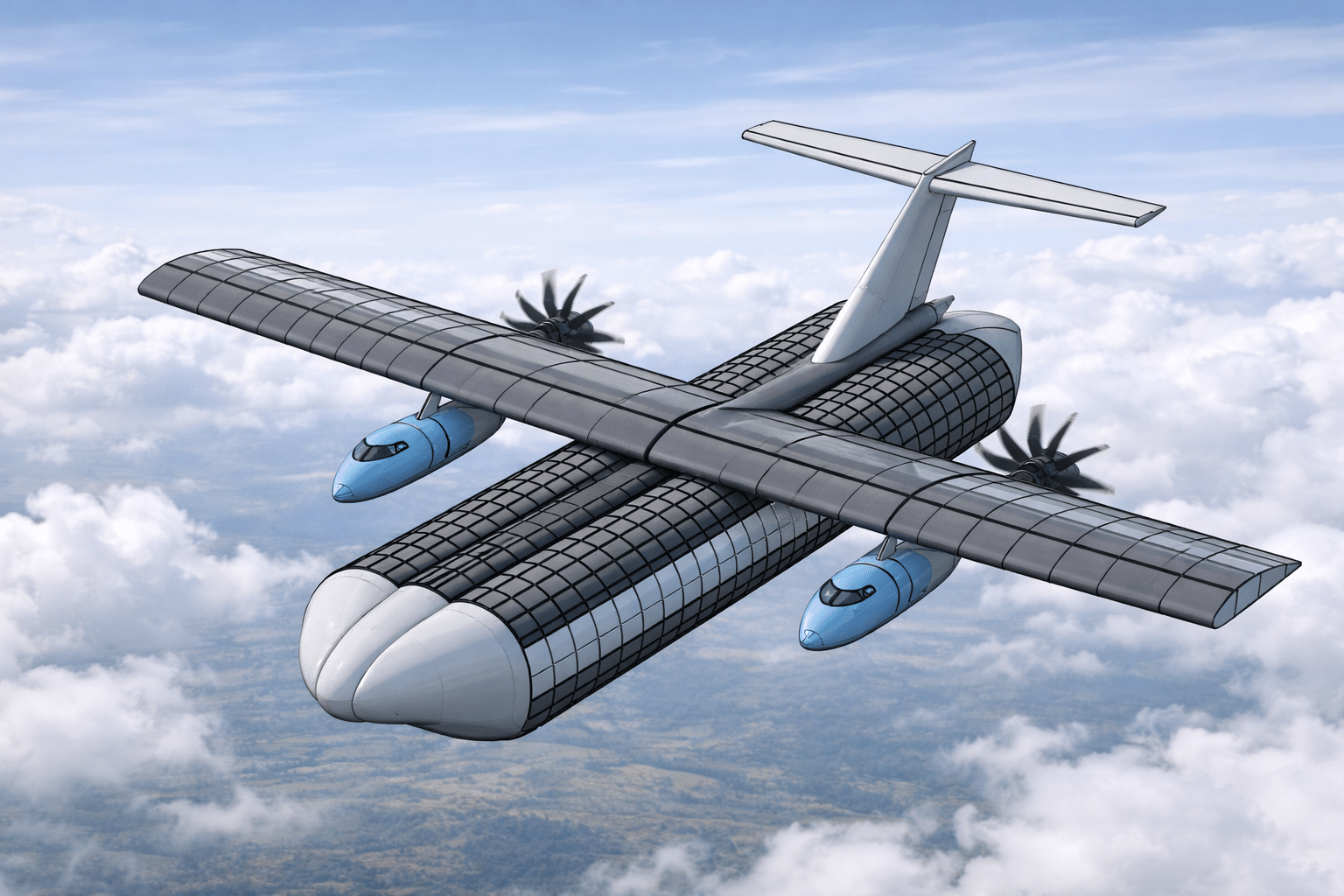
Bee-Plane is built around a simple but disruptive idea: separating the flying platform from the passenger or cargo module.
The upper aircraft, called the Bee, carries the wings, cockpit, landing gear and propulsion system. The detachable fuselage, called the Basket, carries passengers, freight or mission-specific equipment.
This architecture allows the Basket to be prepared, loaded or serviced on the ground while the Bee keeps operating with another module.

Operational Benefits
More flexibility, less time on the ground
Reduced turnaround time
The Basket can be boarded, loaded or unloaded independently, reducing aircraft immobilization on the apron.
Higher aircraft utilization
A single Bee platform can operate with multiple Baskets, improving fleet productivity and daily flight cycles.
Multi-mission capability
Passenger, freight, medical, humanitarian or emergency-response modules can share the same flying platform.
Bi-Open Rotor Architecture
Future-oriented propulsion
The current Bee-Plane configuration focuses on a bi-open rotor architecture.
This propulsion choice aims to improve propulsive efficiency, reduce fuel consumption and support the aircraft’s medium-haul mission profile.
The current design direction is based on a clean two open rotor configuration, integrated with a modular detachable fuselage system.
Current design direction
- 2 open rotor engines
- High-wing platform
- Detachable fuselage module
- Medium-range operations
- Optimized ground logistics

Project Status
TRL3: collaborative validation phase
Bee-Plane is currently in the TRL3 research and prototyping stage. This phase focuses on validating the core technological principles of the aircraft.
Work is being consolidated around aerodynamics, structure, detachable fuselage integration, operational scenarios and performance assumptions.
The objective is to prepare the project for higher maturity levels, including TRL4 and future prototype validation.
Detachable Baskets
One platform, several mission modules
Passenger Basket
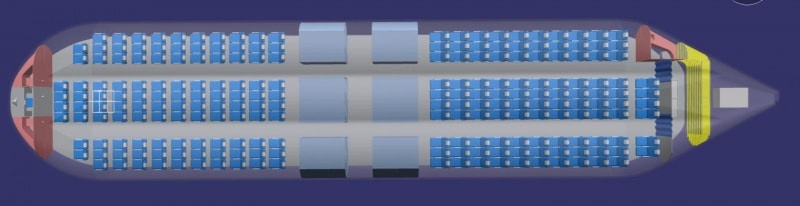
Designed for approximately 220 passengers with a wide cabin layout and optimized boarding flows.
Cargo Basket
Adapted for freight, heavy loads, containers and rapid logistics operations.
Medical Basket
Configurable as an airborne hospital or emergency medical response unit.
Emergency Basket
Suitable for humanitarian operations, evacuation, civil protection or special missions.
Medical Application
Airborne medical care, ready to deploy
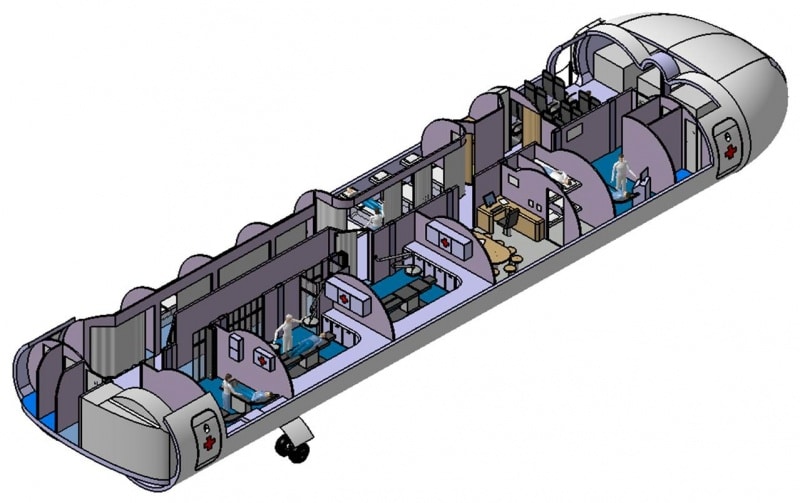
The Hospital Basket extends the Bee-Plane concept beyond passenger transport. It can be configured as a modular medical unit for emergency response, military support or humanitarian missions.
Once detached, the Basket can also operate as a ground-based medical module, reducing setup time in crisis zones.
- Surgical areas
- Triage and consultation spaces
- Patient rooms
- Crew rest and support areas
Passenger Configuration
Passenger comfort with operational efficiency
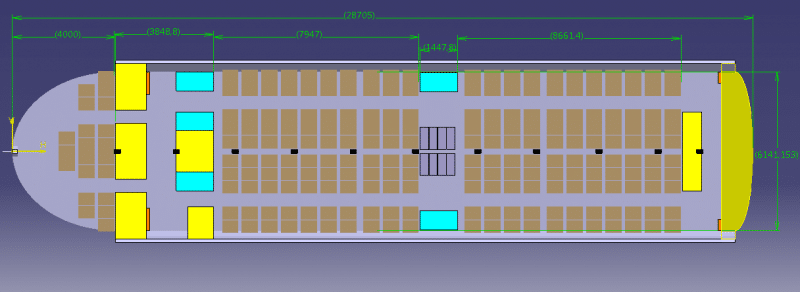
The passenger Basket is designed around a high-capacity cabin concept, wide internal volume, twin-aisle circulation and simplified access to reduce boarding and ground handling time.

Collaborative Innovation
An open engineering ecosystem
Bee-Plane is developed as a collaborative R&D project involving academic, technical and industrial contributions.
The project is supported by the Lesser Open Bee License, allowing structured knowledge sharing while preserving technical traceability and coordinated development.
Project resources
Looking Ahead
Bee-Plane is building the next generation of modular aviation.
The project is looking for academic partners, industrial contributors and technology providers to help move from concept validation to prototype development.